Logistics
Hormuz stays shut, and the bill lands on every freight invoice
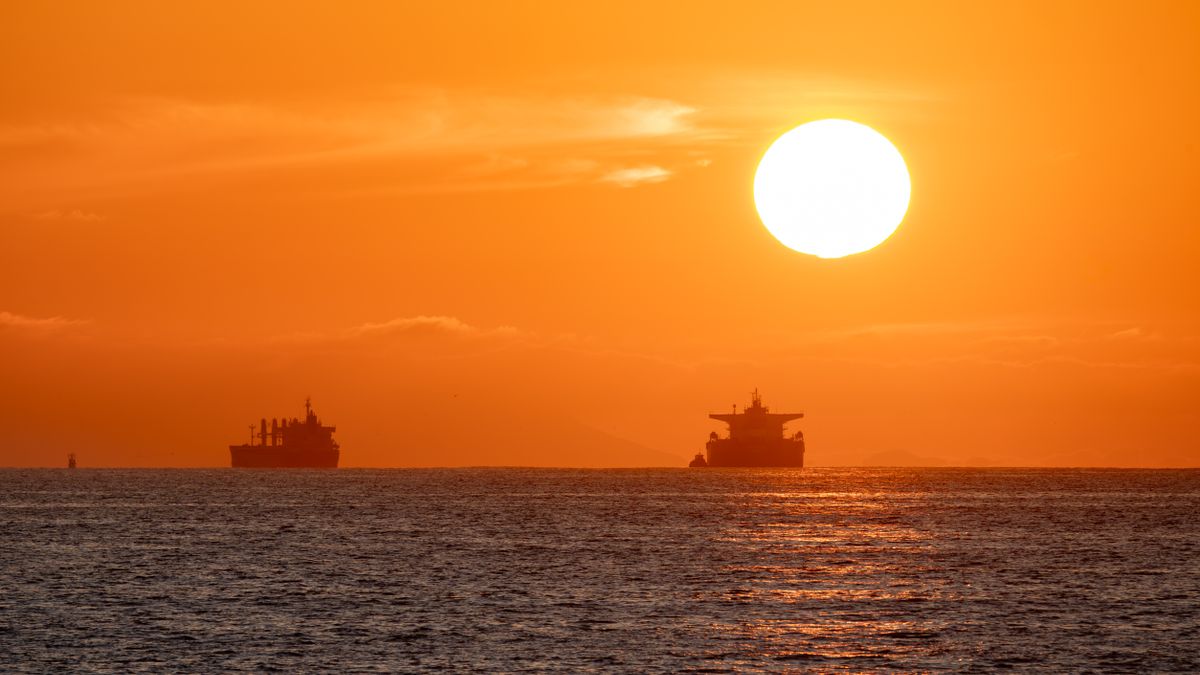
The waterway that carried roughly one fifth of the world's oil has been effectively closed since late February, and this week the prospect of reopening moved further away rather than closer. Iranian Foreign Minister Abbas Araghchi said Tehran will not reopen the Strait of Hormuz without US sanctions relief and compensation for war damages, according to Al Jazeera. Brent crude rose more than 1% on the news, with October futures at $84.11 a barrel, leaving the benchmark up around 16% since the conflict began.
Araghchi also said Iran and Oman were close to an agreement on a shipping route through the strait, but warned that any arrangement would not produce an immediate reopening. The traffic data shows how little is moving in the meantime: between August 4 and August 6, only 8 to 15 vessels crossed the strait, against roughly 130 before the war. Al Jazeera describes the disruption as the largest energy interruption in recorded history.
How a chokepoint became a freight cost
The transmission from a closed waterway to a US freight invoice runs through diesel, and it ran fast. Diesel sat below $4 a gallon in early March. By the week of March 9 it had jumped 96 cents, added 21 cents the following week, and reached $5.375 by March 23, Trucking Dive reported, with California running above $6. The Energy Information Administration had forecast a 2026 average of $4.12 a gallon, a projection issued before the war's full effect was visible.
By March 30, diesel was up 38.6% to $5.401 with oil above $100 a barrel, Transport Topics reported. Ken Adamo of DAT Freight & Analytics put fuel at 30% to 40% of trucking operating costs, which is why a move of that size does not stay inside the fuel line. Spot rates rose roughly 20% in the same stretch, and dry van spot pricing climbed 6% year to date to $2.46 a mile.
What matters for shippers is the mechanics of how that cost arrives. Contract freight pairs a fixed linehaul rate with a floating fuel surcharge, so in theory the increase passes through automatically. In practice it lags. David Spencer of Arrive Logistics noted that carriers' higher revenue is largely offset by higher operating costs and by the typical delay in fuel surcharge adjustments, with spot markets repricing immediately while contract adjustments propagate gradually. Ocean carriers including Hapag-Lloyd and CMA CGM, along with UPS and FedEx on the parcel side, moved to emergency fuel surcharges rather than wait for scheduled resets.
Six months in, the elevated level is the level
The initial spike has moderated without unwinding. On-highway diesel averaged $5.313 a gallon through July 27, up 17.9 cents on the week and $1.508 above where it stood a year earlier, according to Transportation Insight. That is the important number: not the March peak, but the fact that a $1.51 year-over-year premium is still sitting in the cost base in August, five months after the disruption started.
The LTL sector is absorbing that alongside base rate increases and a capacity shake-out. Carriers are cutting terminal footprints and at least one regional operator has exited the market entirely, while the performance spread between operators has widened to nearly 20 points of operating ratio, with Old Dominion at 76.2% against a 93.5% industry average. Sustained fuel costs of this size are what separate the two ends of that range, and the weaker end is where service disruptions and sudden rate corrections tend to originate.
What a lasting fuel premium costs
Why it matters: For big-and-bulky furniture, freight is a larger share of delivered cost than for almost any other ecommerce category, and fuel surcharges compound on top of base rates that are already resetting upward. LTL general rate increases have landed this summer at 7.1% from Saia and 5.9% from ArcBest, following the record-high trajectory set in the second quarter, and parcel carriers are stacking 2026 general rate increases that run well past their headline numbers. A fuel premium that persists through peak season does not show up as a single line item you can negotiate. It shows up in the surcharge table on every mode at once.
What it means for our partners: We treat the current fuel level as the planning baseline rather than a spike waiting to correct, since nothing in the Hormuz negotiations suggests a near-term reopening. That means checking surcharge tables against actual invoices rather than contract assumptions, and being explicit about which freight costs are fixed and which are floating when we set second-half pricing.
Source: Al Jazeera